

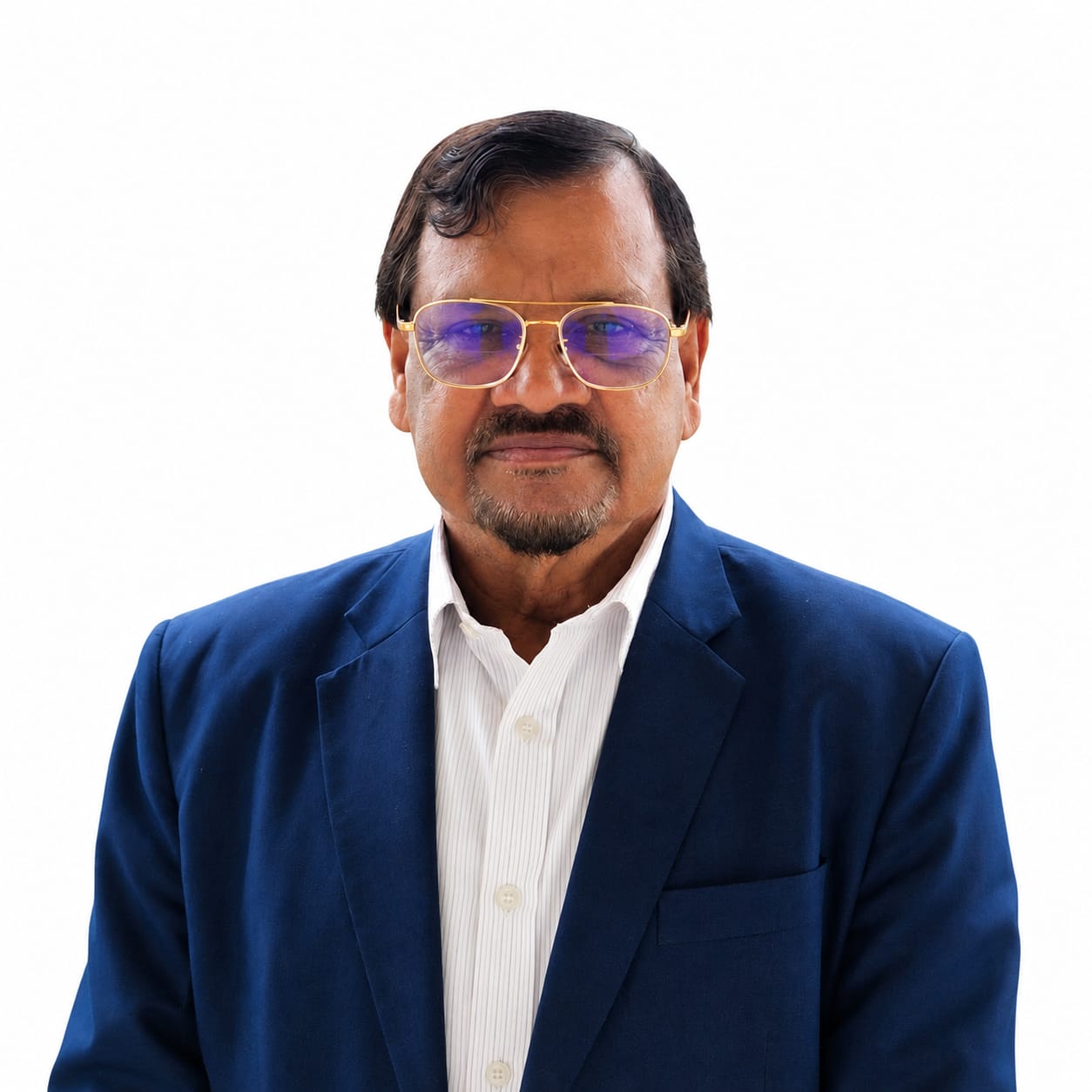
FROM FIVE DREAMS TO HUNDREDS OF TRANSFORMED LIVES — A JOURNEY OF EDUCATION, ENVIRONMENTAL ACTION, HUMANITARIAN SUPPORT AND SOCIAL RESPONSIBILITY
Some people cannot be fully defined by their titles. Their identity is shaped instead by the trust they inspire, the lives they touch and the quiet assurance that they will be there when someone needs help.
Lion M A Rashid is one such name in Mymensingh’s social and development landscape.
For years, his work has been closely associated with ASPADA Environment Development Foundation, an organisation whose activities span education, environmental protection, tree plantation, healthcare, agriculture, livelihoods, social awareness, microfinance and support for disadvantaged communities.
Yet the most compelling chapter of this journey began on a remarkably modest scale—with only five underprivileged but meritorious students.
FIVE STUDENTS, ONE BIGGER DREAM
In 2008, ASPADA launched a monthly scholarship programme to help meritorious students from financially disadvantaged families continue their education.
The philosophy was simple: talent should not be lost merely because a family cannot afford to support a child’s education.
What began with five students gradually developed into a much wider initiative.
According to information presented at a scholarship-related programme in 2026, 220 students are currently receiving scholarships, while 111 former scholarship recipients are working in different organisations and 10 have become Bangladesh Civil Service cadre officials.
Behind these figures lie hundreds of individual stories.
One employed scholarship recipient represents not merely a job, but potentially a transformed family. A BCS cadre represents years of perseverance made possible, at least in part, by an opportunity to remain in education.
And the 220 students currently receiving scholarships represent dreams still in progress.
MORE THAN A SCHOLARSHIP
Perhaps the most distinctive aspect of Rashid’s scholarship philosophy is that it is not conceived simply as financial assistance.
The support continues until a student completes his or her education, and the scholarship money is not expected to be repaid.
Instead, there is a larger expectation: once beneficiaries become established and financially independent, they should, according to their means, help another disadvantaged meritorious student.
It is an idea that turns assistance into a continuing social chain.
One person receives support today and, tomorrow, becomes capable of supporting someone else.
In that sense, a scholarship becomes more than a monthly allowance. It becomes an investment in a culture of solidarity.
EDUCATION, THEN EMPLOYMENT
The relationship between the organisation and its scholarship recipients does not necessarily end with graduation.
At a scholarship-related discussion in 2026, Rashid said that initiatives would be taken to create employment opportunities within ASPADA for scholarship recipients who remain unemployed after completing their education.
The intended cycle is therefore broader:
Education leads to self-reliance; self-reliance creates the possibility of employment; and an established individual can eventually help another person move forward.
This approach reflects a development philosophy that places human capacity—not merely short-term assistance—at the centre.
TRUST IS BUILT THROUGH CONSISTENCY
The story of social work is not always written through formal programmes.
For many disadvantaged people, support is most meaningful when it arrives at a moment of uncertainty—a student facing the prospect of dropping out, a family struggling to survive, a person needing healthcare, or someone searching for a way to earn a livelihood.
Rashid’s long association with social initiatives has given him a reputation among many people in Mymensingh as someone who stands beside disadvantaged communities.
Trust, however, is rarely created by declarations alone.
It grows through continuity.
A person may be remembered for a speech delivered from a stage, but lasting public confidence is more often built through repeated acts of support—particularly those that never make it into the news.
ENVIRONMENT AS A SOCIAL RESPONSIBILITY
The word “environment” in Rashid’s professional identity is not merely part of an organisational name.
Tree plantation and sapling distribution have remained visible components of ASPADA’s programmes.
In 2026, ahead of the inauguration of ASPADA’s 62nd branch in Bhaluka, the organisation arranged free diabetes screening, tree plantation and sapling distribution programmes.
Such initiatives suggest an understanding of environment not as an isolated campaign, but as something deeply connected with health, agriculture, livelihoods and the quality of everyday life.
A tree is not simply a sapling placed in the soil.
It can become shade, shelter, a contributor to biodiversity and part of the ecological resilience of a community.
When thousands of such trees are planted, the impact moves beyond individual beneficiaries and becomes part of a larger environmental effort.
WHERE ENVIRONMENT, HEALTH AND LIVELIHOOD MEET
One of the defining features of ASPADA’s work is the interconnectedness of its activities.
Environment affects agriculture.
Agriculture affects livelihoods.
Livelihoods affect education.
Education is connected with health, dignity and social security.
Seen from that perspective, programmes involving education, healthcare, agriculture, sanitation, technical training and microfinance are not isolated interventions. They address different dimensions of the same underlying challenge: enabling people to build more secure and dignified lives.
Rashid’s long engagement with these areas has consequently placed him within a broader development narrative in Mymensingh.
FROM ASSISTANCE TO CITIZENSHIP
Another important dimension of his work concerns public awareness and governance.
A Bangladesh Sangbad Sangstha report on a social dialogue in Mymensingh on good governance and the Right to Information Act 2009 highlighted Rashid’s role as chair of the programme.
Participants raised issues concerning land and healthcare services, drugs, harassment of women, infrastructure and public services.
The importance of such dialogues lies not simply in identifying problems, but in creating a space where citizens can articulate their concerns and understand their rights.
Development, in this sense, is not only about providing services to people. It is also about enabling people to speak as citizens.
A JOURNEY REFLECTED IN THE NATIONAL MEDIA
Rashid’s activities have appeared at different times in national and widely read media outlets.
The subjects have varied—from scholarships and environmental initiatives to social development, climate concerns, governance and the Right to Information.
Reports published in 2024 covered his participation in an environmental conference, while news reports in 2026 highlighted ASPADA’s scholarship activities, branch expansion, tree plantation and healthcare initiatives.
The events may have been different, but a common thread runs through them: efforts aimed at improving people’s lives.
THE OTHER SIDE OF RASHID: A MAN OF LITERATURE
There is another, quieter dimension to Rashid’s personality—his engagement with literature.
He has also expressed reflections on human life, society, nature, emotions and inner experience through lyrical poetry.
This literary side adds another layer to his public identity.
There is something striking about a person who spends much of his working life dealing with practical social problems while also turning inward to explore the emotional landscape of human existence through words.
On one side is the field worker, dealing with institutions, programmes and people’s immediate needs.
On the other is the poet, listening to the subtler voices of experience.
Perhaps these two dimensions are not contradictory at all.
To work with human suffering as a statistic is one thing.
To feel it as a human experience is another.
THE PHILOSOPHY BEHIND THE NUMBERS
At a scholarship programme in 2026, Rashid urged students not only to become established in life but also to become honest, sincere, responsible and morally grounded human beings.
That emphasis reveals an important element of his development philosophy.
The objective is not simply to produce degree holders or successful professionals.
It is to help shape people who can contribute to society.
Education without humanity can have limited transformative power. Education combined with ethical responsibility, however, can influence families, institutions and communities in ways that extend far beyond an individual’s career.
TEN BCS CADRES—AND THE MANY STORIES BEYOND THEM
The achievement of having 10 scholarship recipients become BCS cadre officials is significant.
So is the fact that 111 former recipients are now working in different organisations.
But the deeper story lies beyond those who have already succeeded.
It belongs equally to the students who are still on the way.
Some are in school. Some are in college. Others are at university or preparing for professional examinations.
Each carries the hopes of a family and faces an uncertain future.
For them, the assurance that financial hardship will not necessarily end their education can be profoundly important.
The real value of such support cannot always be captured in a spreadsheet.
FROM FIVE TO HUNDREDS—AND BEYOND
The journey began with five students.
Today, 220 students are receiving scholarships, while 111 former beneficiaries are working in different organisations and 10 have become BCS cadre officials.
The numbers tell one part of the story.
The human consequences tell another.
A person rarely becomes successful alone.
Behind that success may stand a family whose economic condition has changed, children whose future has become more secure, and a community that has gained a new professional, teacher, administrator, entrepreneur or other contributor.
And if that person later extends a helping hand to someone else, the original act of assistance creates another wave of opportunity.
This may ultimately be the most enduring idea behind Rashid’s scholarship initiative: not merely helping people rise, but encouraging those who rise to help others rise as well.
THE MEANING OF AN ENDURING LEGACY
Public trust cannot be manufactured overnight.
An event may attract attention. A programme may generate applause. A newspaper report may record an achievement.
But sustained trust requires something harder—consistency over time.
Rashid’s long engagement with disadvantaged people, education, environmental protection, healthcare, livelihoods, social awareness and civic dialogue reflects that continuity.
His public identity therefore extends beyond that of an organisational leader.
He represents a particular belief in human potential: that people who are given an opportunity can change their own lives, and that their success can eventually create opportunities for others.
THE JOURNEY CONTINUES
In 2008, there were five dreams.
Today, hundreds of lives are connected to that journey.
Some former beneficiaries are employed. Some have entered the BCS cadre. Others have built careers in different professions.
And many more are still studying, carrying books and looking towards futures they cannot yet fully see.
Perhaps the deepest meaning of Rashid’s work can be found in the eyes of those students who are still on that road.
For them, the scholarship is not merely money.
It is reassurance.
It is the knowledge that poverty does not have to be the final definition of their future.
And ultimately, that may be the most meaningful measure of a life devoted to social responsibility—not the title one carries, but the trust one leaves behind in the lives of people who once needed someone to believe in their possibilities.