
Some lives cannot be adequately understood through a chronological account of birth, political activities, imprisonment and death. To understand such individuals, one must revisit the historical forces that shaped them, examine the convictions that drew them away from the comforts of ordinary life, and consider the ideals that led them to stand against personal interests. One must also understand what repeatedly brought them back from the darkness of prison cells to the struggle for human rights and dignity. Their lives transcend the boundaries of personal biography and become moral documents of their times.
Revolutionary Rabi Niyogi was one such individual. Born into a zamindar family, he chose to stand against the interests of his own class and devoted his life to the struggle for peasant rights. His involvement in anti-British revolutionary activities led to his imprisonment in the notorious Cellular Jail in the Andaman Islands. It was during the isolation of imprisonment that he encountered new political ideas and began to reshape his understanding of society and liberation.
Although many members of his family left the country amid the communal upheaval surrounding Partition, he refused to abandon his birthplace. Throughout his life, he experienced imprisonment under three successive political orders: British colonial rule, Pakistan and independent Bangladesh.
Perhaps the most striking paradox of his life is that a man who had struggled for freedom from his youth continued to experience political imprisonment even after the country had achieved independence. According to the recollections of his daughter, Manjushree Niyogi Dasgupta, he spent approximately 34 years in prison and another 11 years either under house arrest or in hiding. In other words, a substantial portion of his life was spent outside the ordinary conditions of personal freedom.
Yet imprisonment never succeeded in bringing his journey to a halt. Even within confinement, he continued to search for pathways to human emancipation. His life is, therefore, both a history of resistance to colonial domination and a prolonged political inquiry into the relationship between state power and civil liberty.
FROM A ZAMINDAR HOUSEHOLD TO THE POLITICS OF THE PEOPLE
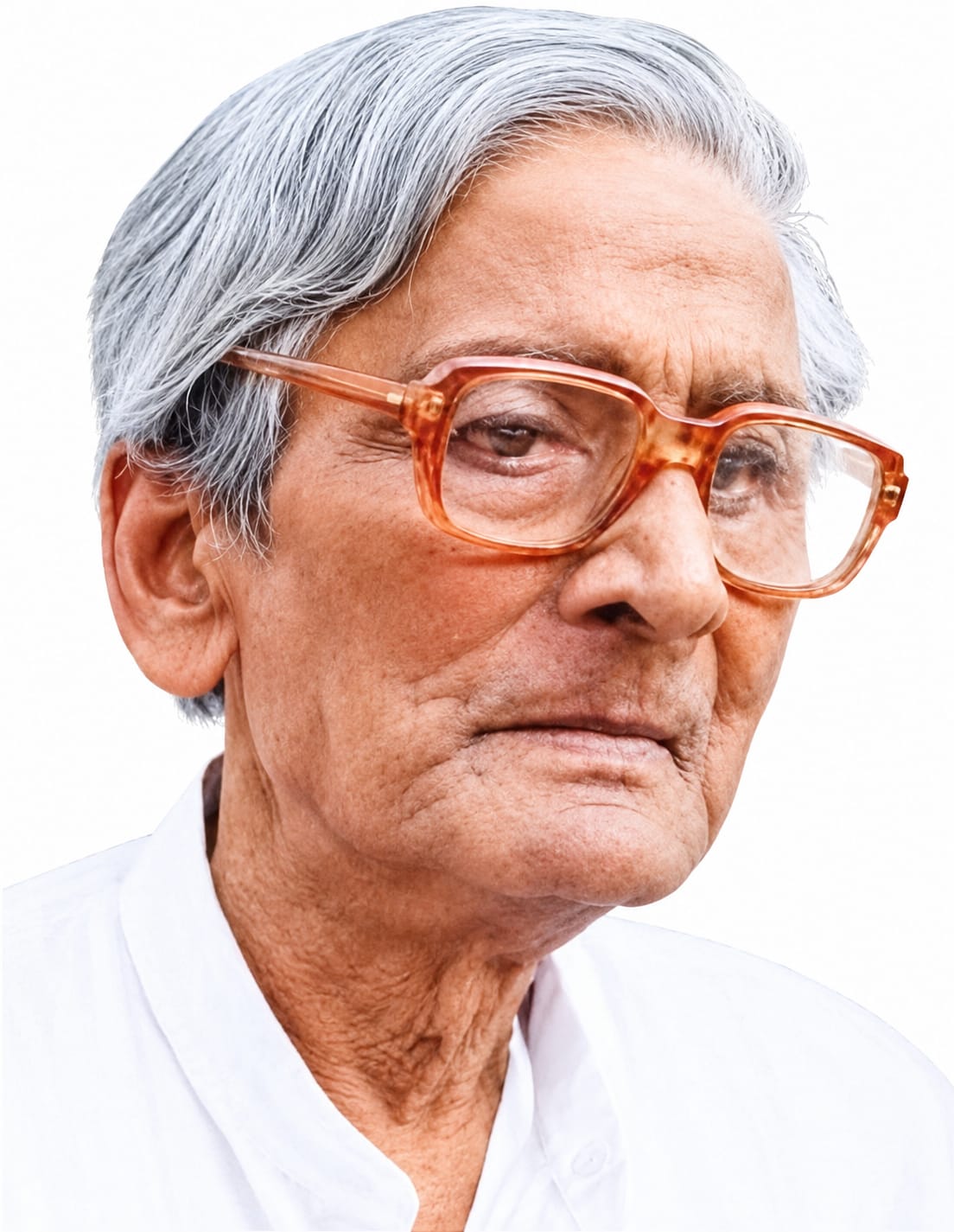
Rabi Niyogi was born on 29 April 1909 in the Girdanarayanpur area of Old Goru Hati, Sherpur town, into a prominent zamindar family. His father was Ramesh Chandra Niyogi and his mother, Surabala Niyogi. The family residence was known as Niyogi Lodge. He was one of eleven siblings. Published sources differ regarding his full name, referring to him as both Rabindranath Niyogi and Rabindrachandra Niyogi. Banglapedia identifies him as Rabindranath Niyogi.
An incident from his childhood offers a particularly revealing glimpse into his character. Biographical accounts of individuals associated with people’s struggles and social movements recount that, as children, Rabi and his brother Manindra Chandra Niyogi would sometimes take clothes from their mother’s chest and distribute them among impoverished people who had little or nothing to wear. They would be scolded or punished when discovered, but after a while, they would repeat the same act.
Perhaps this was simply an expression of childhood compassion. Yet, viewed in retrospect, the incident suggests a moral continuity between his early years and his later political convictions. His inability to remain indifferent to the suffering of others, first evident in childhood, eventually became a defining foundation of his political beliefs and social commitment.
His parents were associated with the Indian National Congress, and he grew up in an environment shaped by patriotism and nationalist consciousness. According to his daughter, Manjushree Niyogi Dasgupta, he took part in a Khilafat Movement procession in 1921, when he was only eleven years old. It was in that procession in Sherpur that his earliest political involvement began to take shape.
He began his education at Victoria Academy in Sherpur and later studied at Govinda Kumar Peace Memorial School. After passing the matriculation examination in 1926, he enrolled at Ananda Mohan College in Mymensingh. During his student years, he became associated with Jugantar, a revolutionary organisation engaged in the struggle against British colonial rule. Following a confrontation between students and police at the college, a case was filed against him, and he was expelled in 1927. He subsequently enrolled at Vidyasagar College in Kolkata, although political activities increasingly took precedence over his academic pursuits. He passed the Intermediate examination in 1929.
A secure future within the privileged circumstances of his family background was within his reach. Yet he chose the uncertain path of resistance.
REVOLUTION AGAINST COLONIAL RULE AND THE JOURNEY TO KALAPANI
In 1929, Rabi Niyogi returned from Kolkata to Sherpur to organise the civil disobedience movement. Working alongside local political activists and revolutionaries, he began mobilising people against British rule. In 1930, he was arrested for participating in the Satyagraha movement organised under the leadership of the Congress.
His revolutionary activities, however, extended beyond non-violent political mobilisation. Through his association with the Jugantar group, he was also connected with armed revolutionary activities directed against British colonial rule.
In 1931, he was tried before a special tribunal on allegations of involvement in an attack by members of the Jugantar group on the zamindar residence at Salda in the Jhinaigati area of Sherpur. He was sentenced to seven years of imprisonment. Initially held in Mymensingh Prison and subsequently transferred to other prisons, including Rajshahi, he became increasingly vocal about the rights and dignity of political prisoners. His defiance of prison authorities eventually led to his classification as a dangerous political prisoner and his transfer to the Cellular Jail in the Andaman Islands.
The Andamans represented far more than a remote group of islands in the history of India’s independence movement. For many who had taken up arms against British colonialism, organised revolutionary networks or dreamed of freedom, the islands symbolised exile, isolation and the brutality of colonial incarceration. Separated from the mainland, the Cellular Jail subjected prisoners to severe discipline, forced labour and psychological suffering.
Following his transfer in 1931, Rabi Niyogi spent approximately five and a half years in the Andaman Cellular Jail. His release in 1937 brought that chapter of his life to a close. Yet his imprisonment was not merely an episode of punishment imposed upon a revolutionary. It also opened an important gateway to a new intellectual and political world.
THE CELLULAR JAIL: THE RECONSTRUCTION OF POLITICAL THOUGHT WITHIN CONFINEMENT
One of the most significant transformations in Rabi Niyogi’s life took place in the Andamans.
His political journey had begun through armed resistance against British rule. But the experience of imprisonment gradually encouraged him to reconsider the structures of exploitation embedded in society and the state. Among the revolutionary prisoners, discussions about the Russian Revolution, the philosophy of Karl Marx, class inequality and the emancipation of workers and peasants became increasingly important.
The recollections of his daughter, Manjushree Niyogi Dasgupta, offer an important insight into this period. She mentions that Rabi Niyogi had taken several books by Karl Marx with him when he was sent to the Andamans. According to her account, in 1933, a group of 32 revolutionaries formed the Communist Consolidation through collective study and discussion of Marxist ideas.
The intellectual and ideological activities that developed inside the Andaman Cellular Jail subsequently contributed to the evolution of the communist movement in India. Many revolutionaries, drawing upon their experiences of armed resistance, began moving towards organised political movements grounded in class struggle and the rights of workers and peasants.
This reveals a fundamental dimension of Rabi Niyogi’s character. He was not merely a man driven by political passion; he also possessed the capacity to learn from experience and reconstruct his political understanding.
A prison designed to suppress independent thought became, paradoxically, a space in which these revolutionaries developed an entirely new intellectual and political horizon.
After his release in 1937, Niyogi returned to the country and became more deeply involved in the communist movement. He subsequently joined the Communist Party of India. Organising peasants across greater Mymensingh and mobilising resistance against exploitative agrarian relations became the principal focus of his political work.
PEASANT LIBERATION POLITICS AGAINST THE INTERESTS OF HIS OWN CLASS
The most consequential chapter of Rabi Niyogi’s political life was his involvement in the peasant movement across greater Mymensingh.
He had been born into a zamindar family, a social order in which peasants were subjected to various forms of exploitation and deprivation. The Tanka, Nankar, Bhawali and Tebhaga movements emerged against the entrenched injustices of this agrarian structure.
Under the Tanka system, peasants were required to pay predetermined quantities of paddy and money. Even when harvests were poor, they remained under pressure to meet their fixed obligations. Under the Nankar system, impoverished tenants were required to provide labour to the zamindar household in exchange for the right to cultivate or occupy land. Failure to provide such labour could place their access to land at risk. Different local forms of the Bhawali system also imposed burdens on cultivators through arrangements involving agricultural production and the division of crops.
These systems represented more than economic exploitation. They also undermined the social dignity, autonomy and independent existence of the peasantry.
Rabi Niyogi devoted himself to organising peasants against these oppressive practices. He was one of the principal organisers of the provincial peasant conference held in Nalitabari in 1943. The conference played an important role in strengthening and consolidating the peasant movement across the greater Mymensingh region.
He also played a significant organisational role in the Ninth All-India Kisan Conference, held in Netrokona from 5 to 9 April 1945.
From 1946 onwards, the Tebhaga movement spread across different parts of Bengal. Its central demand was that sharecroppers should retain two-thirds of the produce they cultivated, ensuring a fairer distribution of agricultural output. Although cultivators provided the labour and bore the risks of production, a disproportionate share of the harvest went to landowners. The movement challenged this inequality and demanded the rightful share of those who actually worked the land.
For Rabi Niyogi, peasant rights were never merely political slogans. They were inseparable from the dignity of labour, livelihood security and social justice.
His decision to challenge the interests of the very class into which he had been born remains one of the most significant aspects of his political life. Rather than exploiting the privileges associated with his family background, he chose to remain accountable to his political conscience. This distinguished him not only as an organiser of the peasant movement but also as a political figure who consciously rejected the advantages of his inherited class position.
PARTITION, COMMUNALISM AND HIS COMMITMENT TO HIS HOMELAND
The Partition of 1947 was one of the most profound human tragedies in the history of the subcontinent. The division of the country along religious lines was followed by communal violence, mass displacement and widespread insecurity, devastating the lives of countless people.
During the communal riots of 1950, Rabi Niyogi and his wife, Jyotsna Niyogi, were imprisoned in Mymensingh. Many members of their extended family, including their parents and other relatives, left the country and moved to India. Rabi Niyogi, however, refused to abandon his homeland.
An account published by Udichi Shilpigoshthi records his words:
‘Those of you who must leave, go ahead. But I will never leave this country. If I must die, I shall die here.’
These words expressed more than emotional attachment. They reflected a profound commitment to his homeland, to the people with whom he shared his life, and to the political convictions that had shaped his existence.
At a time when religious identity was increasingly being used to determine where people belonged and whether they could live safely, he continued to regard his homeland as a shared space of human relationships, collective memories and common struggles.
For him, the country did not belong to any single religious community. It belonged to its people. Despite the political realities created by Partition, his commitment to coexistence, secularism and his birthplace remained inseparable from his political beliefs.
POLITICAL IMPRISONMENT UNDER THREE SUCCESSIVE STATE SYSTEMS: 34 YEARS BEHIND BARS
To understand Rabi Niyogi’s life, particular attention must be paid to his experiences of imprisonment. Almost every major phase of his political journey was accompanied by confinement.
His first arrest came in 1930 during the Satyagraha movement. This was followed by a seven-year sentence in 1931 for his alleged involvement in revolutionary activities and his subsequent imprisonment in the Andaman Cellular Jail.
His release in 1937 did not mark the end of his encounters with imprisonment. He was arrested again in 1939 during the Second World War. After his release in 1941, he was detained under security legislation because of his anti-war political position and activities associated with the slogan “Not a single brother, not a single penny”, which opposed Indian participation in the British war effort.
Following the establishment of Pakistan, he was arrested in 1948 for his involvement in the Tanka and Tebhaga movements. He remained imprisoned until 1953, spending nearly five consecutive years behind bars.
His subsequent arrests and periods of detention were associated with the United Front election campaign in 1954, the police strike and food movement in 1955, the military rule of Ayub Khan from 1958 to 1963, detention under security legislation during the 1965 India-Pakistan war, and another period of imprisonment under Yahya Khan in 1970.
After the Liberation War of 1971, he became involved in the political and social activities of independent Bangladesh. Yet following the assassination of Bangabandhu Sheikh Mujibur Rahman and most members of his family on 15 August 1975, the changing political circumstances of the country once again led to his arrest. He remained in prison from 1975 to 1977.
During the Ershad regime, he was arrested once more in 1988, despite his advanced age. This was the final chapter of his long history of imprisonment.
In her published recollections, his daughter, Manjushree Niyogi Dasgupta, records that he spent approximately 34 years in prison and another 11 years under house arrest or in hiding. This account, drawn from family testimony, offers an important perspective on the extraordinary extent of confinement and uncertainty that marked his life.
A historical paradox emerges from this record. The colonial government against which he had struggled had first subjected him to prolonged imprisonment. His political activities continued to bring him into conflict with the Pakistani state. Even after Bangladesh achieved independence, his life remained marked by political detention.
It would, of course, be historically inaccurate to treat the political structures, legal systems and forms of repression under these three successive regimes as identical. They belonged to different historical contexts. Yet throughout his personal journey, questions of political freedom, ideological rights and the relationship between the state and the individual repeatedly resurfaced.
His life raises a fundamental question: does the attainment of national independence necessarily guarantee the freedom of its citizens?
JYOTSNA NIYOGI: NOT MERELY A REVOLUTIONARY’S COMPANION, BUT A STRUGGLER IN HER OWN RIGHT
Any account of Rabi Niyogi’s life would remain incomplete without recognising the contribution of his wife, Jyotsna Niyogi.
In 1941, he married Jyotsna Rani Majumdar, daughter of Jogesh Majumdar of Bikrampur. Among those present at their wedding were prominent communist leader Muzaffar Ahmad and revolutionary Trailokyanath Chakrabarty, along with several other notable figures of the political movement.
After marriage, Jyotsna Niyogi did not remain merely a companion in her husband’s political journey. She became a member of the Communist Party herself and took an active role in movements for women’s emancipation, workers’ and peasants’ rights, and cultural activism.
During the Pakistan period, she was imprisoned on several occasions. Although biographical accounts differ regarding the precise duration of her imprisonment, multiple recollections testify to her prolonged political involvement and experience of incarceration.
It is reported that she had to endure the hardships of prison life even while caring for her newborn child, Kajal Niyogi.
The revolutionary writer and political activist Satyen Sen described her as an ‘extraordinary woman’.
Her contributions to women’s awakening, cultural organisation, the intellectual development of children and young people, and the promotion of secular social consciousness in Sherpur were particularly significant.
The establishment of Sherpur’s central Shaheed Minar around 1953–54 is also associated with the initiatives of Rabi and Jyotsna Niyogi, as recorded in various recollections.
Jyotsna Niyogi’s life reminds us that women’s contributions to political struggles have often remained obscured behind their family identities. Yet women like her were organisers, activists, bearers of political convictions and independent participants in movements for social transformation.
FOUR CHILDREN AND THE CULTURAL LEGACY OF A REVOLUTIONARY FAMILY
Rabi Niyogi and Jyotsna Niyogi had four children: three sons and a daughter. They were:
Ranjit Niyogi: The eldest child. He was known in Sherpur’s cultural circles as a poet and visual artist. He died in January 2016.
Manjushree Niyogi Dasgupta: Their daughter. She was a singer associated with Swadhin Bangla Betar Kendra, the radio station that played a historic role during the Liberation War, and was also involved in the central organisational activities of Udichi. Her recollections of her parents’ lives and struggles constitute an important source for research into Rabi Niyogi’s biography.
Kajal Niyogi: Their son, who is reported to have worked as an engineer.
Sajal Niyogi: Their son, who is reported to have been associated with the teaching profession.
In this family, politics, culture, art, music and social responsibility became different expressions of a shared legacy.
The identities of Rabi Niyogi’s children deserve recognition not merely because they were the descendants of a revolutionary, but also because each pursued an individual life and contributed to the family’s broader cultural inheritance.
THE LIBERATION WAR: HUMANITARIAN AND ORGANISATIONAL CONTRIBUTIONS TO INDEPENDENCE
During the Liberation War of 1971, Rabi Niyogi played an organisational role in support of Bangladesh’s independence.
With assistance from the Liberation War Support Committee in West Bengal, India, and other progressive organisations, he was involved in collecting food, clothing and medicine for refugees in various camps across Sector 11. His activities extended to refugee camps and support networks in Dalu, Nalitabari, Haluaghat and the Mahendraganj border area, as well as efforts to assist freedom fighters.
The Liberation War was not simply a history of armed encounters on the battlefield. It was also a vast humanitarian and organisational undertaking involving the survival of refugees, the provision of supplies to freedom fighters, medical assistance, shelter and the mobilisation of international public opinion.
Rabi Niyogi was part of this broader struggle for humanitarian support and national liberation.
During the war, Pakistani forces set fire to his family residence in Sherpur. The house that had preserved the memories of his childhood and family life was destroyed because of his political position in support of Bangladesh’s independence.
Although this caused a deeply personal loss, it did not weaken his commitment to the cause.
HIS PRISON ENCOUNTER WITH BANGABANDHU AND A HUMAN RELATIONSHIP ACROSS IDEOLOGICAL DIVIDES
Another noteworthy aspect of Rabi Niyogi’s life was his acquaintance and personal relationship with Bangabandhu Sheikh Mujibur Rahman.
According to Manjushree Niyogi Dasgupta, the two developed a close relationship while both were imprisoned in Dhaka Central Jail in 1964–65.
On a subsequent visit to Sherpur, Bangabandhu reportedly enquired about the Niyogi family and met Jyotsna Niyogi, according to family recollections.
Their relationship illustrates how mutual respect and human warmth can develop between individuals despite differences in political ideology.
POLITICS, JOURNALISM AND CULTURAL ORGANISATION
Rabi Niyogi’s identity was not confined to that of a revolutionary or organiser of the peasant movement. He also made contributions to journalism and cultural organisation.
He was associated with journalistic activities involving the weekly Ekota and the daily Sangbad. During the Liberation War, his reports on different fronts and conditions in the border regions were published in Kolkata’s Kalantar, according to biographical accounts.
On 16 December 1973, he took an initiative in establishing the Sherpur Journalists’ Association and was elected its president. His role in this initiative also forms an important part of the history of local journalism and organisational development.
His contributions to cultural activism, together with those of Jyotsna Niyogi, were equally significant. They were involved in establishing the Patabahar Khelaghar Asar and developing Udichi’s organisational activities in Sherpur.
They believed that genuine human emancipation could not be achieved through political transformation alone; it also required cultural awakening. Their cultural activities sought to nurture independent thinking, secular values, humanism and social awareness among children and young people.
This conviction reflected another important dimension of their political philosophy: transforming society required more than changing those who held power. It also demanded a transformation of people’s consciousness, intellectual outlook and cultural values.
For Rabi Niyogi, journalism was not simply a professional exercise in publishing news. It was a means of documenting social realities, giving voice to ordinary people and preserving the historical record of his time.
HONOURS AND RECOGNITION: THE ABSENCE OF NATIONAL STATE RECOGNITION
For his long revolutionary career, imprisonment in the Andaman Cellular Jail, contributions to the peasant movement and organisational role during the Liberation War, Rabi Niyogi received recognition from various institutions and organisations during his lifetime.
Biographical accounts mention several honours, including the Dalu Genocide Day Award in 1989; recognition from the Veer Savarkar Smriti Trust in Mumbai, India, in 1991; honours from the Tilak Trust and the Municipal Corporation of Pune; the Jiten Ghosh Kalyan Trust Award in 1994; the Masterda Surya Sen Parishad Award in 1995; the Tebhaga Award in 1996; and the Shaheed Dhirendranath Datta Award. In 1999, he was also honoured on the occasion of the golden jubilee of the Communist Party of Bangladesh.
His participation in a special ceremony for surviving former prisoners of the Andaman Cellular Jail, held in Mumbai from 25 to 28 February 1991, deserves particular mention. He attended as an invited representative from Bangladesh. The islands that had once imprisoned his youth later became the setting in which his history of incarceration was formally recognised.
The question of official recognition by the Government of Bangladesh, however, remains a separate matter.
In 2023, reports appeared of a human chain and the submission of a memorandum in Sherpur demanding that he be awarded the Independence Award. These developments indicate that demands for national recognition of his contributions have continued to be raised at the local level.
A fundamental question therefore remains: to what extent has the state fulfilled its responsibility to preserve and properly recognise the contributions of those who devoted their lives to independence, peasant rights, communal harmony and human emancipation?
RABI NIYOGI AS A WRITER: AN ATTEMPT TO DOCUMENT HIS OWN TIMES
Rabi Niyogi was a political organiser, but he also maintained a keen interest in history and writing.
Among his notable works are:
Ekattorer Bijoygatha: Sherpur (The Story of Victory in 1971: Sherpur)
Sherpurer Itihashe Muslim Obodan (Muslim Contributions to the History of Sherpur)
Tebhaga Andolon, Sangram O Bhobishyot (The Tebhaga Movement: Struggle and Future)
These works reflect his historical interests, political experiences and commitment to documenting the history of his region.
His writings on Sherpur are particularly relevant to the study of local history. The major events of national history cannot be fully understood without examining the political, social and cultural histories of individual regions and communities. Regional histories are indispensable to the construction of a country’s broader historical narrative.
When a political activist undertakes to document his own times, his writings become more than personal recollections. They also provide material for future generations seeking to understand the past.
IDEOLOGY, POLITICAL CONVICTION AND THE CHANGING WORLD
The collapse of the Soviet Union and the crisis of socialist state systems brought profound changes to global politics during the 1990s. Many left-wing activists and organisers were compelled to reconsider their political convictions. Rabi Niyogi, however, remained committed to his socialist ideals.
He was also active in the anti-autocracy movement of 1990. Advancing age did not distance him from his political and social responsibilities.
His participation in the February 1991 ceremony in Mumbai honouring surviving former prisoners of the Andaman Cellular Jail was a particularly meaningful moment of recognition. The place that had once imprisoned his youth had, in the later years of his life, become an enduring part of his historical identity.
Rabi Niyogi died in Sherpur on 10 May 2002, at the age of 92.
His death brought an end to a long revolutionary journey, but the political, cultural and humanitarian legacy he left behind did not come to an end.
THE LIFE OF RABI NIYOGI: LESSONS IN HISTORY, THE STATE AND PEOPLE’S LIBERATION
A closer examination of Rabi Niyogi’s life brings several important themes into focus.
First, one’s social origins do not necessarily determine one’s moral position. Born into a zamindar family, he nevertheless devoted himself to the struggle for peasant rights. His willingness to challenge the privileges of his own class remains one of the defining features of his life.
Second, imprisonment does not always bring an end to intellectual freedom. His confinement in the Andamans became an opportunity to explore new political philosophies and develop a deeper understanding of society. A prison designed to punish and silence him also helped open new horizons of thought.
Third, patriotism emerges from a profound relationship with people and place. His decision to remain in his homeland amid the communal turmoil of Partition reflected his commitment to the country and its people.
Fourth, the struggle to uphold political convictions often transforms personal life. His prolonged imprisonment, periods in hiding and the uncertainty imposed upon his family demonstrate the extraordinary personal costs that can accompany a life devoted to political ideals.
Fifth, women’s participation is equally fundamental to the struggle for human emancipation. The life of Jyotsna Niyogi demonstrates that women in revolutionary families are not merely companions or supporters; they can also be independent organisers and leaders in their own right.
Sixth, political liberation must be accompanied by cultural liberation. Their involvement in Khelaghar, Udichi and other cultural organisations illustrates the importance of transforming society through education, independent thought and cultural awakening.
His life also leaves us with a profound question about the relationship between the state and its citizens. Even when systems of government change, are freedom of expression, political beliefs and individual rights always protected? Is independence defined solely by national sovereignty, or are the dignity and freedom of citizens equally indispensable to its meaning?
CONCLUSION: THE HISTORY OF INDEPENDENCE AND THE QUESTION OF HUMAN LIBERATION
Rabi Niyogi cannot be fully understood simply as an anti-British revolutionary, a communist organiser or a leader of the peasant movement. His life was deeply intertwined with the history of colonial rule in the subcontinent, the trauma of Partition, changing structures of state power, struggles for the rights of peasants and workers, and the political realities of independent Bangladesh.
One of the most consequential paradoxes of his life is that the man who dreamed of freedom from British colonial rule, resisted oppression under the Pakistani state and worked for the independence of Bangladesh also experienced political imprisonment in the country whose liberation he had helped support. His life brings into sharp focus the distinction between achieving independence as a state and securing genuine freedom for its people.
Yet his history should not be confined to a single, linear political interpretation. His political positions, organisational affiliations and activities may be examined and evaluated in the context of their respective historical periods. Differences of interpretation are an essential part of historical inquiry. Nevertheless, his struggle for peasant rights, opposition to communalism, humanitarian contribution during the Liberation War and sustained efforts towards cultural awakening occupy an important place in the social history of Bangladesh.
In today’s world, as state power, economic inequality, individual self-interest and political opportunism once again place questions of human rights and dignity at the centre of public life, Rabi Niyogi’s journey confronts us with several fundamental questions. Is independence merely the political liberation of a territory, or does it also require guarantees of intellectual freedom, freedom of expression, livelihood, dignity and justice? Is the state merely an institution for exercising power, or does it bear an ethical responsibility to protect the rights and security of its people?
Rabi Niyogi is no longer among us. Yet his footsteps remain embedded in the soil of Sherpur, the history of peasant movements across greater Mymensingh, the Cellular Jail of the Andamans, the refugee camps of the Liberation War and the progressive cultural movements of this country.
His life, therefore, is not merely a recollection of a revolutionary from the past. It is a historical testament to resistance against colonialism, the defence of political conviction in the face of state repression, and an enduring struggle for human emancipation.
A man who devoted his youth to the cause of freedom was compelled to experience imprisonment even in an independent country.
Have we, since achieving independence, truly upheld its fundamental human values—civil liberties, justice and the dignity of every individual?
The life of Rabi Niyogi leaves us with these questions as a long, quiet and inescapable legacy.
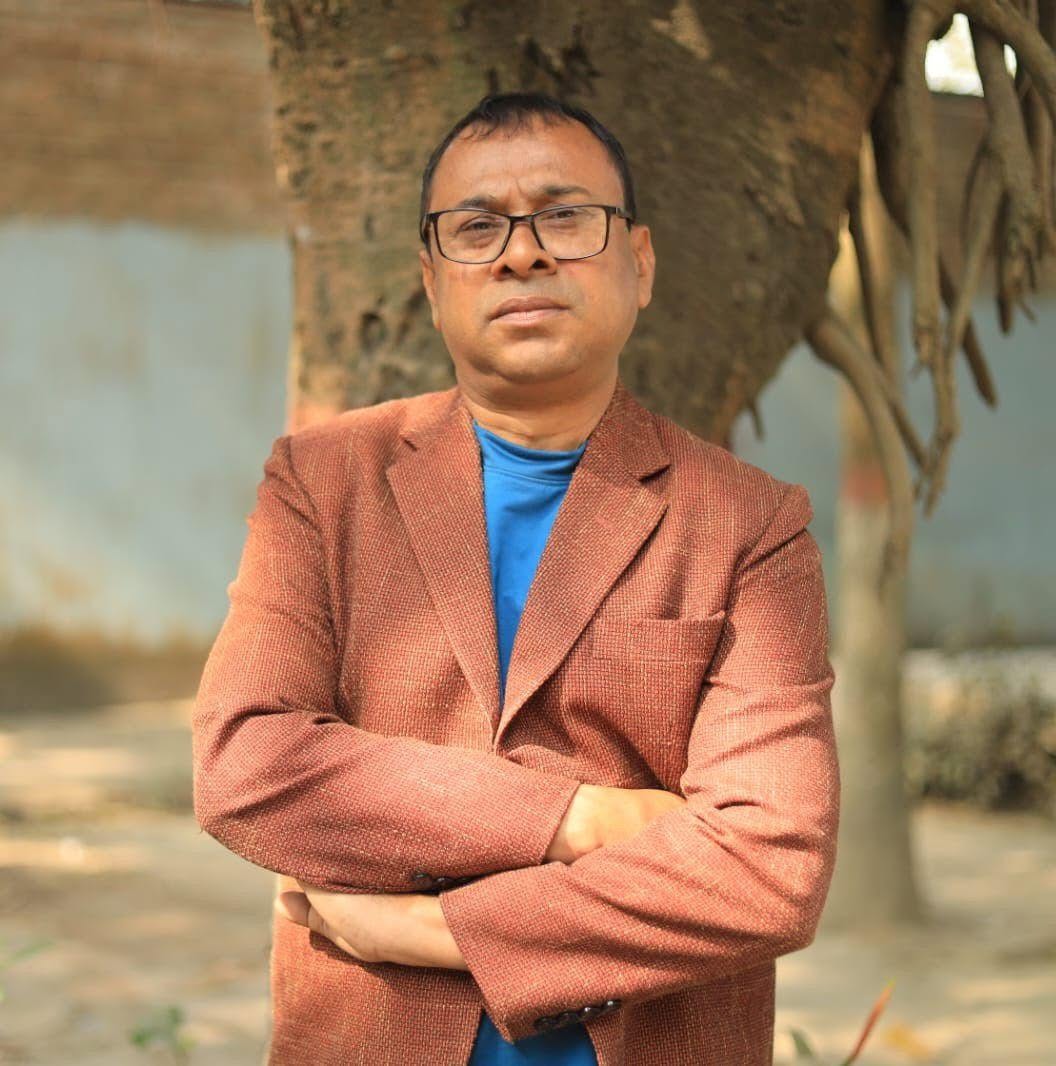
The author is a poet, essayist and journalist