

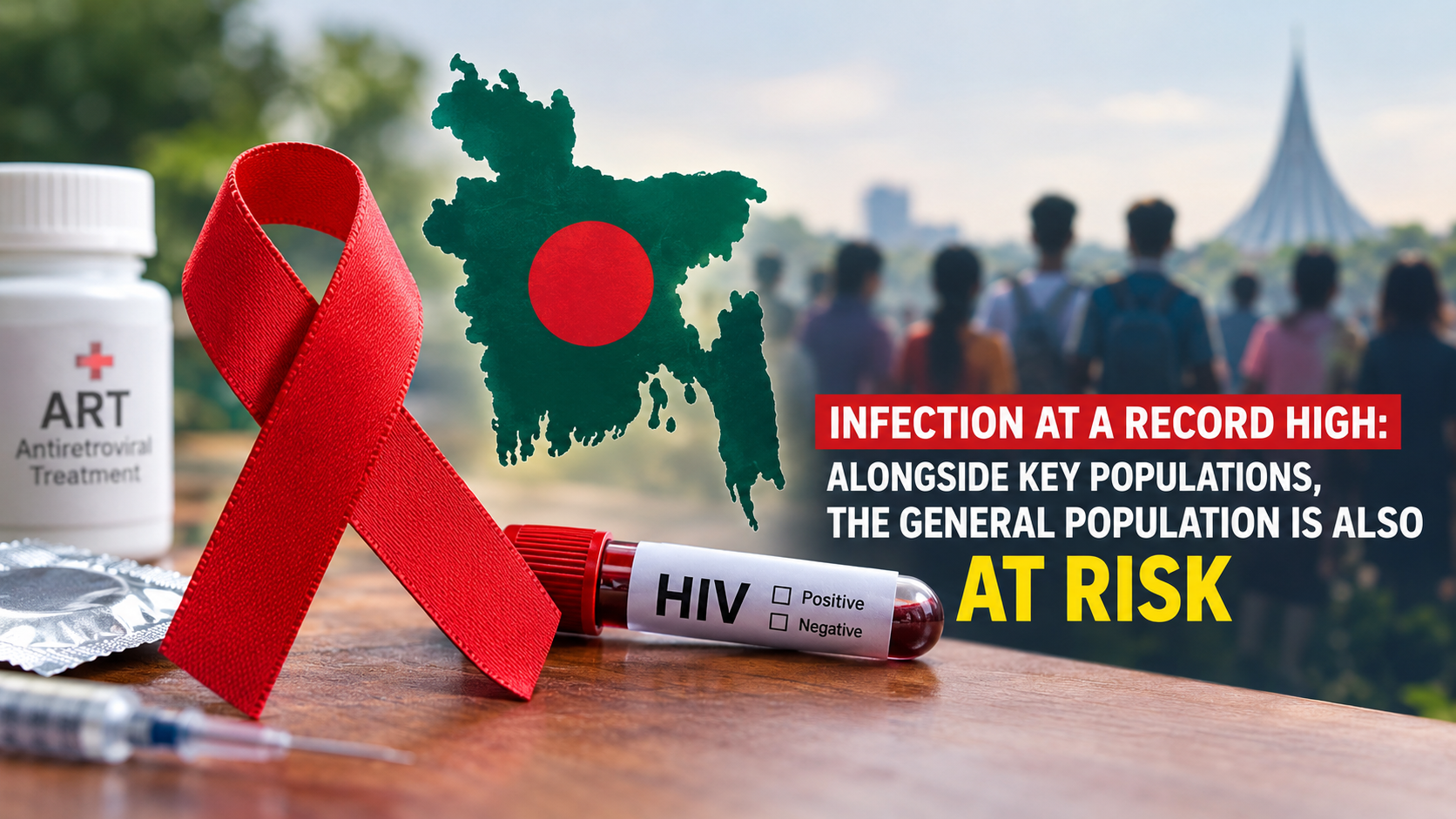
INFECTION AT A RECORD HIGH: ALONGSIDE KEY POPULATIONS, THE GENERAL POPULATION IS ALSO AT RISK
For a long time, Bangladesh has been regarded as a country with a relatively low prevalence of HIV infection. However, recent data indicate a growing concern. According to figures from the National AIDS/STD Control Programme (NASP) under the Directorate General of Health Services (DGHS), approximately 1,891 new HIV cases were identified in Bangladesh between December 2024 and November 2025. This is reportedly the highest annual number of newly detected cases since 2000. Previously, the largest annual increase had been recorded in 2023, when the number of newly identified cases was 329.
THE INFECTION SCENARIO: WHAT THE NUMBERS TELL US
Since 1989, a total of 2,666 people have reportedly died from AIDS-related causes in Bangladesh. At present, an estimated 17,400 to 17,700 people are living with HIV in the country.
The reassuring fact is that the prevalence of HIV among the general population remains below 0.01 percent, meaning that Bangladesh is still nationally classified as a low-prevalence country. However, prevalence among certain high-risk or key populations can reach approximately 0.7 percent, particularly in some border areas of northwestern Bangladesh where relatively higher rates have been reported.
WHO IS MOST AT RISK?
An analysis of recently identified cases indicates that approximately 56 percent belong to so-called key populations, including sex workers, people who inject drugs, and men who have sex with men. Around 12 percent are migrant workers and their family members, while approximately 11 percent are from the Rohingya community (representing about 217 people). The remaining cases are from the general population, indicating a new and concerning trend.
Gender-based data show that approximately 81 percent of newly identified cases are male, 18 percent are female, while the remaining proportion belongs to the transgender community.
By age, the highest number of new cases has been reported among people aged 25 to 49 years. However, HIV infection is also increasing rapidly among young people. In 2025, approximately 42 percent of newly identified cases were young people, compared with 31.5 percent in 2024.
Experts believe that while HIV infections were previously concentrated primarily among high-risk groups, the increasing number of cases among the general population represents a clear warning for the future.
COVERAGE AND GAPS IN HEALTHCARE SERVICES
According to government figures, approximately 84 percent of people diagnosed with HIV have been brought under treatment services. However, compared with the estimated total number of people living with HIV, the number receiving treatment remains inadequate.
Experts point to a lack of awareness, social stigma, and limited knowledge about testing facilities as major barriers. Many people therefore do not seek HIV testing in time, creating a possibility that the actual number of people living with HIV may be higher than official figures indicate.
STIGMA AND SOCIAL ISOLATION: MISCONCEPTIONS MUST BE CHALLENGED
The longstanding stigma surrounding HIV/AIDS has become one of the major barriers to controlling the disease. After being diagnosed with HIV, many individuals face discrimination within their families, communities, and workplaces, which can lead to severe social isolation.
Fear of discrimination often discourages people from getting tested. Even after diagnosis, some individuals keep their status secret and remain outside regular healthcare services, potentially increasing the risk of further transmission.
However, advances in modern medicine mean that HIV is no longer equivalent to a death sentence. With early diagnosis and regular Antiretroviral (ARV) treatment, people living with HIV can lead long, healthy, and productive lives—much like people living with other chronic conditions such as diabetes or hypertension.
With consistent treatment, the amount of HIV in the blood can be reduced to an undetectable level, significantly reducing the risk of transmission to others. Therefore, rather than treating people living with HIV with fear or discrimination, providing them with appropriate medical care, psychological support, and social acceptance is a far more effective approach.
HOW HIV IS TRANSMITTED
HIV is primarily transmitted through a limited number of specific routes:
Receiving unscreened or improperly screened blood;
Unprotected sexual contact;
Reuse or sharing of contaminated needles and syringes, particularly among people who inject drugs;
Transmission from an HIV-positive mother to her child during pregnancy, childbirth, or breastfeeding.
HIV is NOT transmitted through: Ordinary physical contact, sharing food or utensils, shaking hands, hugging, or living in the same environment.
This information needs to be communicated widely because misconceptions about transmission are a major source of discrimination and social exclusion. Ensuring proper screening of donated blood, practicing safer sex, never sharing needles or syringes, and ensuring that pregnant women have access to HIV testing and treatment can significantly reduce the chain of transmission.
GOVERNMENT INITIATIVES: EXPANDING THE SCOPE OF SERVICES
The National AIDS/STD Control Programme (NASP) under the Directorate General of Health Services (DGHS) and the Ministry of Health and Family Welfare has been responsible for HIV/AIDS prevention, policy development, and implementation in Bangladesh since 1997. Bangladesh was among the first countries in South Asia to adopt a comprehensive national policy addressing HIV/AIDS.
Under the programme, specialized intervention services for key populations are currently available in seven districts. These services include counselling, awareness education, and regular health examinations. The government plans to expand these services to additional districts in the future
In addition, HIV Testing Centres are operating in 23 districts, while Antiretroviral Therapy (ART) Centres are operating in 13 districts. These centres provide free treatment as well as regular awareness and prevention programmes. The services are supported and implemented through collaboration among UN agencies, international NGOs, the Global Fund, and civil society organizations.
Recently, the government has undertaken a major project worth approximately BDT 4,039 crore to prevent and control tuberculosis, HIV, and malaria. The government itself is expected to contribute approximately BDT 3,169 crore.
The primary objective of the project is to significantly reduce mortality associated with these three diseases. Under the programme, people receiving HIV treatment will receive financial assistance of BDT 820 per month. Tuberculosis patients will receive this assistance for six months, while people receiving treatment for HIV and malaria will receive it for up to one year. The project aims to bring approximately 9,500 people living with HIV under treatment services.
AWARENESS AND PROPER EDUCATION: THE CORE OF PREVENTION
Health experts believe that alongside expanding treatment services, addressing the lack of awareness and accurate sexual health education is one of the most effective ways to prevent HIV transmission.
The rapid increase in infection among young people and unmarried individuals sends a clear message: age-appropriate health education at the school and college levels, accurate information about safer sexual practices, and broader campaigns against social misconceptions are urgently needed.
At the same time, health testing and counselling services for migrant workers should be strengthened both before overseas employment and after their return to Bangladesh.
CONCLUSION
Overall, although Bangladesh continues to have a low national prevalence of HIV, recent trends—particularly the increase in infections among young people and the general population—should not be taken lightly.
Expanding HIV testing and ART centres, increasing intervention services for key populations, ensuring sustainable financial and healthcare programmes, and promoting a stigma-free social environment must move forward simultaneously.
Only through accurate information, accessible healthcare, responsible health education, social acceptance, and sustained public awareness can Bangladesh effectively address this silent and emerging challenge.
Sources: National AIDS/STD Control Programme (Directorate General of Health Services), UNAIDS estimates, and recent reports published in national media.