

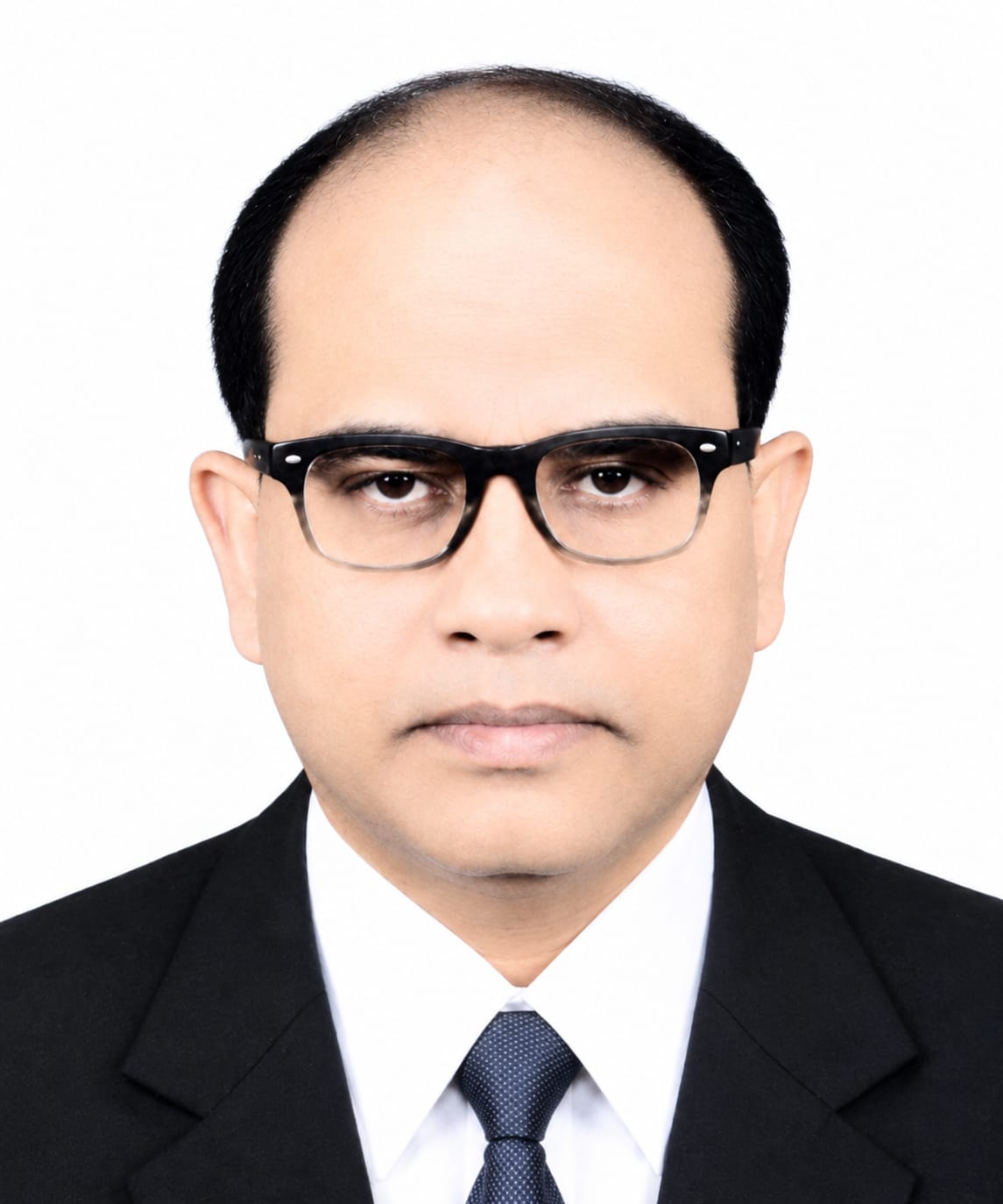
Some lives become long trails of light.
From birth to death, that light travels through the soil of a homeland, the world of knowledge and, sometimes, the darkest passages of history.
The life of Professor Jyotirmoy Guhathakurta was such a trail of light. It began in Mymensingh, with ancestral roots in Banaripara of Barishal, flourished in the intellectual environment of the University of Dhaka, and reached its final brilliance in the blood-soaked days of March 1971.
He was not merely a martyred intellectual. He was a teacher, literary thinker, humanist and committed advocate of free thought.
His final chapter is so deeply intertwined with the birth of Bangladesh that remembering Jyotirmoy Guhathakurta is also to remember a history of education, humanity, duty and sacrifice.
BORN IN MYMENSINGH, WITH ROOTS IN BANARIPARA
Jyotirmoy Guhathakurta was born in Mymensingh town on July 10, 1920.
His father, Kumudchandra Guhathakurta, came from Banaripara in Barishal, while his mother, Sumati, came from an educated family. Both his parents were schoolteachers.
Education, therefore, became one of the earliest values to shape his life.
His identity was never confined to a single geography. Mymensingh was the city of his birth and childhood; Banaripara was the land of his paternal roots.
His later intellectual life centred largely on the University of Dhaka, but Mymensingh remained an important foundation of his formative years.
In 1936, he passed his matriculation examination from Mymensingh Zilla School.
He then studied for a year at Presidency College in Calcutta. A bout of typhoid prevented him from sitting for the final examination.
He returned to Mymensingh and enrolled at Ananda Mohan College, from where he passed the Intermediate Arts examination in 1939.
This period was crucial to the making of the man he would become.
The future University of Dhaka professor, provost of Jagannath Hall and martyr of the Liberation War had begun his intellectual journey in the educational institutions of Mymensingh.
A RAPID RISE THROUGH THE WORLD OF KNOWLEDGE
In 1939, Guhathakurta entered the University of Dhaka to study English.
In 1942, he stood first in the first class in the honours examination in English and received the Pope Memorial Gold Medal in recognition of his outstanding academic performance.
He completed his master’s degree in English the following year.
Between 1944 and 1949, he taught at several colleges, including Ananda Mohan College in Mymensingh, Gurudayal College in Kishoreganj and Jagannath College in Dhaka.
In 1949, he joined the Department of English at the University of Dhaka as a lecturer.
For him, the classroom was more than a place for delivering lessons. It was a space where thought could be cultivated.
Literature, in his understanding, was not merely an exercise in aesthetics; it was a way of learning to understand people, ask questions and make sense of one’s own time.
FROM LITERATURE TO HUMANISM
Guhathakurta’s intellectual world was liberal, inquisitive and deeply humanistic.
In 1963, he went to King’s College London on a British Council scholarship for higher research. His research focused on the use of classical mythology in modern English literature.
After returning to Bangladesh in 1967, he became a reader in the Department of English at the University of Dhaka.
Yet his intellectual interests extended well beyond literary theory.
He was associated with humanist and free-thinking movements and stood for reason and human dignity at a time when the political climate of Pakistan was becoming increasingly restrictive and communal.
According to contemporary accounts, the Pakistan government viewed him with suspicion. His Hindu family background and association with left-leaning politics reportedly brought him under surveillance and restrictions.
Seen in that context, the violence inflicted upon him in 1971 was not simply an isolated act of brutality.
His intellectual and humanist convictions had already placed him in opposition to the narrowness and intolerance of the military state.
PROVOST OF JAGANNATH HALL
On April 20, 1970, Jyotirmoy Guhathakurta became provost of Jagannath Hall at the University of Dhaka.
He assumed the responsibility at a time when political tensions in East Pakistan were rapidly escalating.
By March 1971, Dhaka had become a city waiting for an explosion.
The non-cooperation movement, political uncertainty and growing military preparations all suggested that something terrible was approaching.
People advised him to leave for his own safety. He also encouraged students to seek safer places.
But he did not abandon his post.
He could not leave his students behind.
That decision would ultimately bind his life to one of the darkest chapters in the history of Bangladesh.
MARCH 25: WHEN THE NIGHT DESCENDED INTO DARKNESS
On March 25, 1971, the Pakistan Army launched Operation Searchlight.
Dhaka University became one of the principal targets of the military assault.
The soldiers reached Teachers’ Quarters at 34/A.
Professor Jyotirmoy Guhathakurta of the Department of English and Professor Muniruzzaman of the Department of Statistics were taken out of the building and shot.
Muniruzzaman died at the scene, while Guhathakurta was critically wounded.
A bullet seriously injured Guhathakurta in the neck and spine.
Outside, Dhaka was engulfed in gunfire, curfew, fear and death.
His wife, Basanti Guhathakurta, their school-going daughter Meghna and their domestic worker Swarna brought him inside the house in a wounded condition.
They remained with him and cared for him through the night and the following day.
When the curfew was relaxed briefly in the early hours of March 27, he was taken to Dhaka Medical College Hospital.
But Dhaka in those first days of the war was virtually a city under siege.
His condition did not improve after admission.
Accounts of the period indicate that the spinal injury left him paralysed from the waist down.
MARCH 30: THE END OF A LIFE
March 30, 1971.
9:30 in the morning.
This is the time recorded in the Dhaka Medical College death register for Jyotirmoy Guhathakurta’s death.
But the tragedy did not end there.
His family never received his body.
Where his remains were taken or where his final rites were performed remained unknown to the family.
The death of a university professor and intellectual thus became, for his family, the beginning of another long period of uncertainty.
A man had been killed.
Then even the physical evidence of his death slipped beyond his family’s reach.
BASANTI: A MARTYR’S WIFE, ANOTHER FIGHTER OF 1971
The story of Jyotirmoy’s sacrifice cannot be separated from the life of his wife, Basanti Guhathakurta.
After losing her husband, Basanti had to begin another struggle—with her daughter Meghna—for survival.
Because of the security situation, she could not return to her university residence.
During the war, she moved between places of refuge, at times concealing her identity and at other times depending on sympathetic people and hospitals for shelter.
For her, the memory of her husband was not simply a source of grief. It was also a source of strength.
Their only child, Meghna Guhathakurta, later became a teacher and researcher in the Department of International Relations at the University of Dhaka.
In a sense, the unfinished intellectual journey of her father found another expression through her own pursuit of knowledge.
Basanti, too, was an educator in her own right.
A significant part of her life was devoted to the advancement of women’s education.
Her story, therefore, cannot be reduced to that of “a martyr’s wife”. She was herself a woman who endured a long and difficult struggle.
THE CRUELTY DID NOT END WITH HIS DEATH
One of the most painful chapters in Guhathakurta’s story emerged through later investigations and archival records.
Although his death was recorded at Dhaka Medical College, his family never received his body.
Even obtaining the necessary documentation after his death became difficult amid the chaos of the war.
University records also indicate that issues relating to his educational loan for overseas study, life insurance and other institutional dues remained entangled in correspondence with his family during the war.
After Bangladesh became independent, final approval for the release of certain funds was given on August 12, 1972.
These episodes point to a painful reality: for some families of martyrs, the war did not end with the end of the fighting.
It continued through uncertainty, loss and administrative struggle.
WHY JYOTIRMOY REMAINS RELEVANT
To remember Jyotirmoy Guhathakurta merely as a “martyred intellectual” is to overlook the deeper meaning of his life.
He was a teacher for whom knowledge meant liberation.
He was a literary thinker for whom culture meant the free development of human beings.
He was a humanist for whom human identity stood above religious identity.
And he was a provost who, at a moment of grave danger, chose not to abandon his students.
His death was not simply another episode of wartime killing.
It was also the culmination of a moral decision—to place responsibility before personal safety.
A SON OF MYMENSINGH, A MARTYR FOR BANGLADESH
Guhathakurta’s life deserves to be read as part of Mymensingh’s history as well.
He was born in this city.
He spent his formative school years at Mymensingh Zilla School.
Ananda Mohan College became an important chapter in his higher education.
He also began his teaching career in the city’s educational environment.
From there, his intellectual journey expanded into the wider world—through the University of Dhaka, King’s College London, literature and international humanist thought.
His paternal roots lay in Banaripara of Barishal, but Mymensingh was the city of his birth and formative years.
He can therefore be remembered as a son of Mymensingh, a man whose roots reached back to Banaripara, and a martyred intellectual whose life became part of the history of Bangladesh.
THE FINAL LIGHT
The night of March 25, 1971 was a night of darkness.
Countless people were killed in that darkness.
But the killers could not understand one fundamental truth: people can be killed, but ideas cannot.
Jyotirmoy Guhathakurta’s body was shattered. His life ended on March 30.
His family never received his remains.
Yet the values he embodied—faith in humanity, commitment to free thought, dedication to education and the moral courage to stand against injustice—survived.
Looking back at his life today, one decision shines with particular force:
He did not leave his students behind.
Within that simple act lies something of the essence of his life.
To him, a teacher was not merely someone who taught lessons; a teacher was also a source of shelter.
Being a provost was not simply an administrative position; it was a responsibility towards people.
And a country was not merely a territory. It was a moral commitment.
From the soil of Mymensingh, that teacher gave his life and left behind a lesson that remains undiminished: sometimes, light does not merely illuminate the way.
Sometimes, one must become the light.
Jyotirmoy Guhathakurta became that light.
His death was not the final word.
His sacrifice became the longest chapter of his life.
And the light that the night of March 25 failed to extinguish continues to shine in the history of Bangladesh.